Thursday, November 29, 2012

Hot Hot Hot!!!

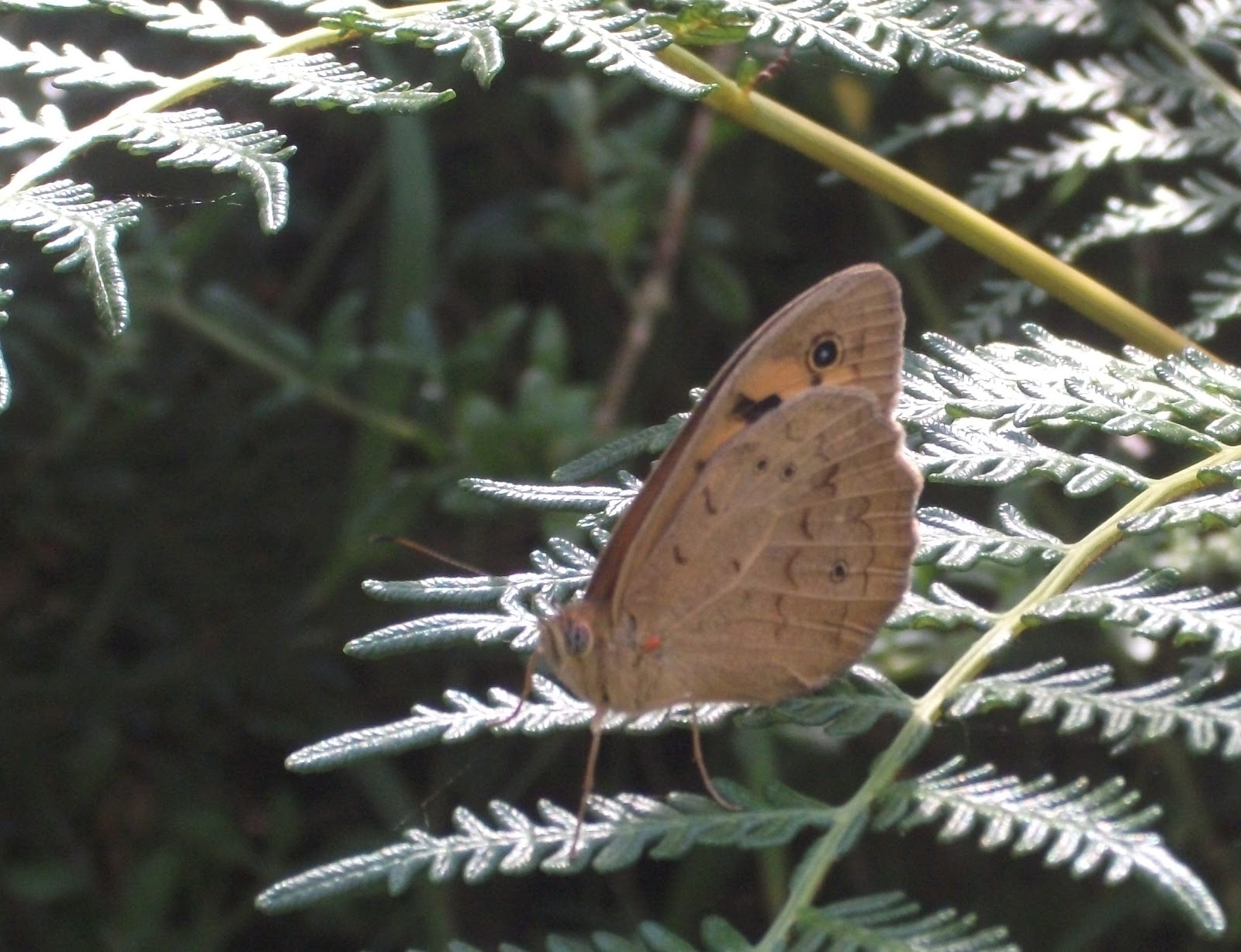
Common Brown Butterfly Heteronympha merope (male)
 
During the sweltering heatwave afflicting most of southern Australia this week, one could be excused for thinking that all animals suffer as we do in the heat. Ectothermic (cold blooded) animals however have a metabolism that works much more efficiently at temperatures that would risk heat-stroke for any bird or mammal species, including us. Often considered as "primitive lifeforms" it is only by observations during hot weather that this misconception can be challenged. 
 

Pale-flecked Garden Sunskink Lampropholis guichenoti

Unknown Bull Ant Myrmecia sp.


                                 Common Bottle-daisy Lagenophora stipitata

Saturday, September 22, 2012

Something To Sing About

All the signs that Spring has arrived in Venus Bay abound. The melodious calls of birds proclaiming territory and breeding rights fill the bush, and one of the most musical is the Golden Whistler Pachycephala pectoralis is hard for your ears to miss. (Male pictured above, females are duller and lack the black & white head markings).


The plants are also getting into the mood, with many beginning their flowering. The Running Postman Kennedia prostrata (above) delivers a crimson treat with its pea-like blooms. For keener eyes are the small Native Violets Viola hederacea (below) whose flower stalk stands only 10cms tall at most.

The Silky Guiana Flower Hibbertia sericea var. sericea (below).
What would Spring be without a Fungi responding to the rains and warmth? An Earth Star Geastrum sp. (right) adds yet another colour and texture to the community of life playing out the seasonal vocation of procreation.

Wednesday, August 8, 2012

Focusing on Andersen Inlet erosion risks

Once the peat layer is compromised the salt marsh quickly disintergratedsand is being washed further into the inlet and trees provide little resistance to erosion

I guess there has been a lot of discussion in this blog about changes on the surf beach at Venus Bay but in reality the most significant erosion is going on all along Andersen Inlet.The deeper channels (think of them as a submerged meandering but tidal streams) are snaking back and forth changing position within the inlet progressively widening the inlet and eroding its banks (particularly at Inverloch, on the north eastern side, and around doyle’s road, on the western side. Sand is progressively  moving deeper into the inlet and this hinders the development of mangroves, which are really the only way to slow down eroding the shores. The open “beaches” allow waves to undercut the peat layer of the salt marshes and once compromised like this the salt marshes quickly wash away. Trees offer only slightly more resistance but they soon also succumb to the erosion.

Tuesday, June 19, 2012

Did the earth move for you?

alvin earthLast nights earthquake between Moe & Mirboo North, best estimates at the moment a 5.4 Magnitude at 8:54PM, gave the folk in Melbourne a good shaking, but how was it felt at Venus Bay?
Geoscience Australia likes to get reliable first hand accounts of what people felt, as it helps them improve both the assessment and prediction of the effects of earthquakes & damage. If you want to help here is the link,

Saturday, June 16, 2012

Having fun …BUT

 IMGP4776 IMGP4777 IMGP4778
These very noisy mechanized wave runners are obviously have fun, albeit in a high risk way BUT they certainly didn’t impress the other beach one users. The fishermen were muttering about yoboos, the pipi gathers were yabbering about the strong smell of the spilt fuel and the tradition board riders shaking their heads in despair, What I notice is their wasn’t a single bird to be seen anywhere close by. Yet up at beach five there were plenty.
IMGP4818 
Is this a case of NIMBY over-reaction or is jet skying one of those recreations that really does needs to be controlled in national parks?